Archival edition. This is the paper as presented at Science Symposium 2022, reproduced without revision. Later work has revised some of its figures and terms.
Understanding Revealed Cosmology Through Visualization
Matching Stellar Observations with Revealed Universe Architecture
Click links to read quotes in context.
Abstract The cosmology of the Urantia Papers is presented on such a grand scale that it can be challenging to take in through the narrative alone. With advanced computing power and software, we can more readily graphically represent revealed concepts and thus more easily comprehend the given descriptions of Paradise Isle, the central universe, space levels, space respiration, and force circulations. A new and evolving 3D Master Universe Model can become a framework for scientists and Urantia scholars to build upon by incorporating current and historical astronomical observations.
Introduction
The Urantia Book [1], also known as the Urantia Papers, is the primary source for this article.
Models, be they of planetary orbits of solar systems or the three-dimensional structures of the spike proteins, help us understand relationships. We model particles, molecules, structures, organisms, planets, galaxies, and even universes. The word model comes from the Latin modulus, which means “a measure.” In English, the term was first used in the 16th century to note plans for a building. [2] By definition, a model is an informative representation of something. [2] For this paper, the authors present a three-dimensional computer-generated model of revelatory cosmology as described in The Urantia Book. [1] Construction of the Master Universe Model (MUM) was started in 2019 by David Neufer.
Revelation students have modeled concepts in their minds to aid with understanding the book’s relationships, and they have drawn diagrams on convenient surfaces to illustrate discussion points for each other. Serious scholars have been modeling more complex representations since the book’s publication in 1955. (See appendix A for a partial list).
The Master Universe Model is built from the center outwards. At the center is the Eternal Isle of Paradise. All other objects, pathways, and conditions surround it. Though the MUM includes hundreds of thousands of objects, many have not yet been included. (See Future Studies)
In addition to illustrating revealed cosmology, the MUM lets us superimpose current and historical astronomical data. In this way, we can unify revealed concepts with evolutionary information.
The MUM is evolving. In the following years, we will add new scientific details. Currently, we have positioned 3500 stars; it will eventually be possible to include millions of stars, galaxies, galactic walls, and voids. And the model will change as our understanding of revealed concepts grows.
This paper presents visualizations from this model. We hope to demonstrate a reasonable method for aligning known stellar observations with revealed universe architecture.
Materials and methods
MUM uses Blender software, “a free and open-source 3D creation suite”. [3] Star data is provided by “3D Star Map,” a Blender add-on. [4] The add-on’s developer, Jumping Puzzle, uses star data from SIMBAD (the Set of Identifications, Measurements, and Bibliography for Astronomical Data) maintained by Université de Strasbourg/CNRS. [5] Currently, this database has 13,247,040 identified objects, including stars, galaxies, nebulae, quasars, exoplanets, clusters, nova, and black holes. 3D Star Map presents a small but representative sample of this data.
Visual information from the MUM can be presented live using 3D software. Images and videos are now being rendered from this model. In the future, the model can be incorporated into an informational app, similar to astronomy and anatomy educational apps. It can even be the basis of a virtual reality experience.
Assumptions
Where information is not stated or subject to interpretation, assumptions are made. These are some of them:
- Cosmological measurements are in light-years (LY). 1LY=5.88 trillion miles. (6)
- The “plane of creation” and the galactic plane are coplanar.
- The “plane of creation” bisects pervaded space horizontally.
- The galactic plane’s poles are pivoted 180° for the overlay of star data.
- Each space level is 100 times the size of the preceding one. MUM’s decimal (base 10) pattern finds its origin in Paper 12. This 1-100 sizing is extrapolated from Paradise Isle out through to the outer space levels. , [1], [7]
- The E/W diameter of Paradise is one Paradise width, abbreviated as “one par.” The 1-100 scale from #5 appears to indicate that one par equals about one light-year.
- “Mother force” lines are modeled on our current understanding of magnetic force lines.
- The universes expand and contract 10% from a mid-point due to space respiration.
- In space level cross-sections, the angles used to show midspace, pervaded space, and unpervaded space are based on 30° increments, like the hour placements on a 12-hour clock.
- The superuniverse level is about 1 million light-years across. Its transverse diameter varies and depends on orientation and space respiration. [1] [7]
- The distance from the Sun to Paradise center is deduced to be between 450k to 500k ly. The MUM places the Sun at 450 ly from the center. [1] [7]
Discussion and gallery
The revolutions of starry systems proceed as they do, independent of an observer’s position. As a way of unifying stellar observations, astronomical mapping conventions decide on a fundamental plane, on which way is up, and on which way is clockwise. To coordinate these observations with revealed cosmology, we will examine both data types, observed and revealed, then decide which polar arrangement is consistent. We do this by looking at Sagittarius A; the Cygnus sun-forming region; and M31 – the Andromeda nebula (or Galaxy.)
This paper will tell its story mostly with pictures. These views from the Master Universe Model include illustrative quotes from The Urantia Book and other explanatory information when needed. As a starting point for understanding the cosmos (or anything else,) it is wise to begin at the Eternal Isle of Paradise.
Paradise Isle
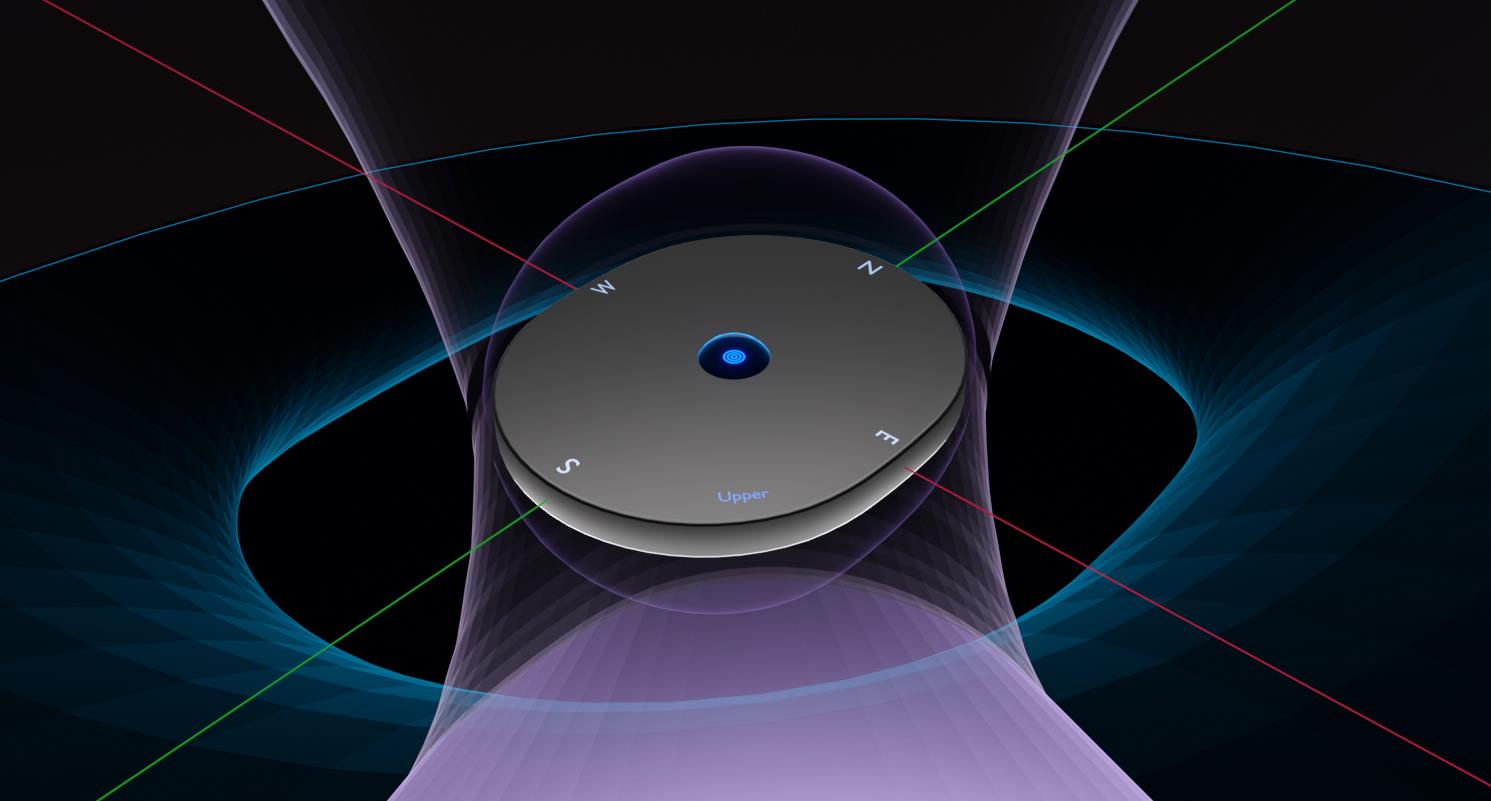
“At the heart of this eternal and central universe is the stationary Isle of Paradise, the geographic center of infinity and the dwelling place of the eternal God.”
Paradise Isle Dimensions
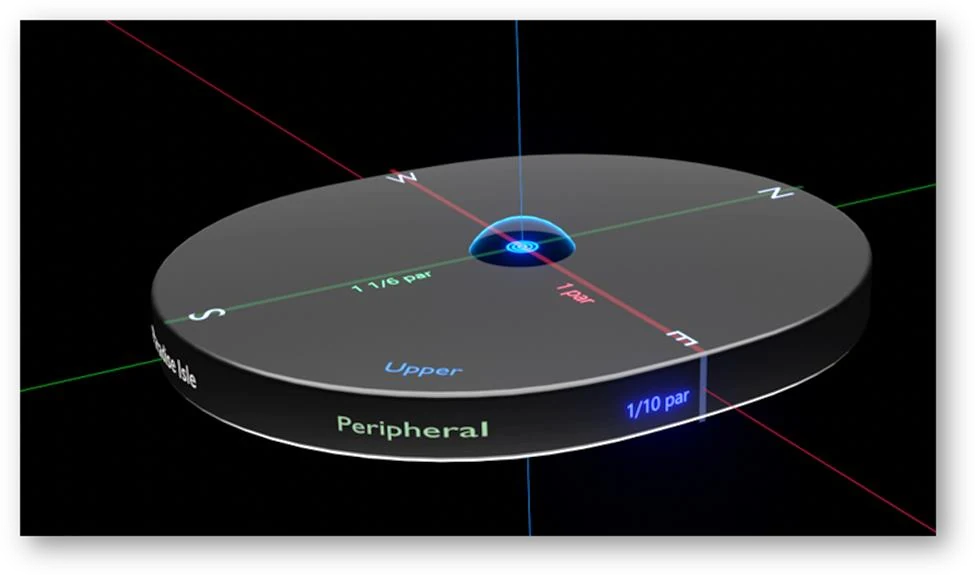
“In form Paradise differs from the inhabited space bodies: it is not spherical. It is definitely ellipsoid, being one-sixth longer in the north-south diameter than in the east-west diameter. The central Isle is essentially flat, and the distance from the upper surface to the nether surface is one tenth that of the east-west diameter.”
Mother Force of Space
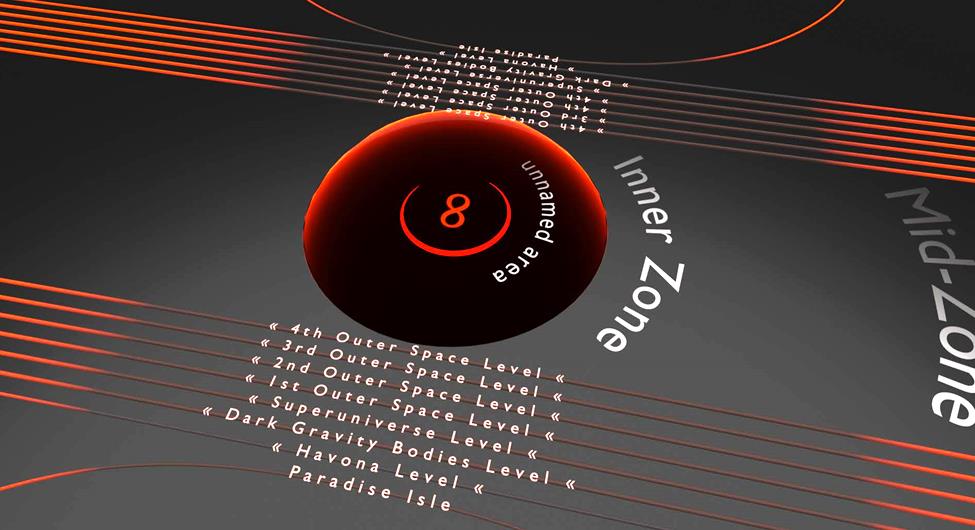
“The inner zone of this force center seems to act as a gigantic heart whose pulsations direct currents to the outermost borders of physical space. It directs and modifies force-energies but hardly drives them.
Mother Force of Space
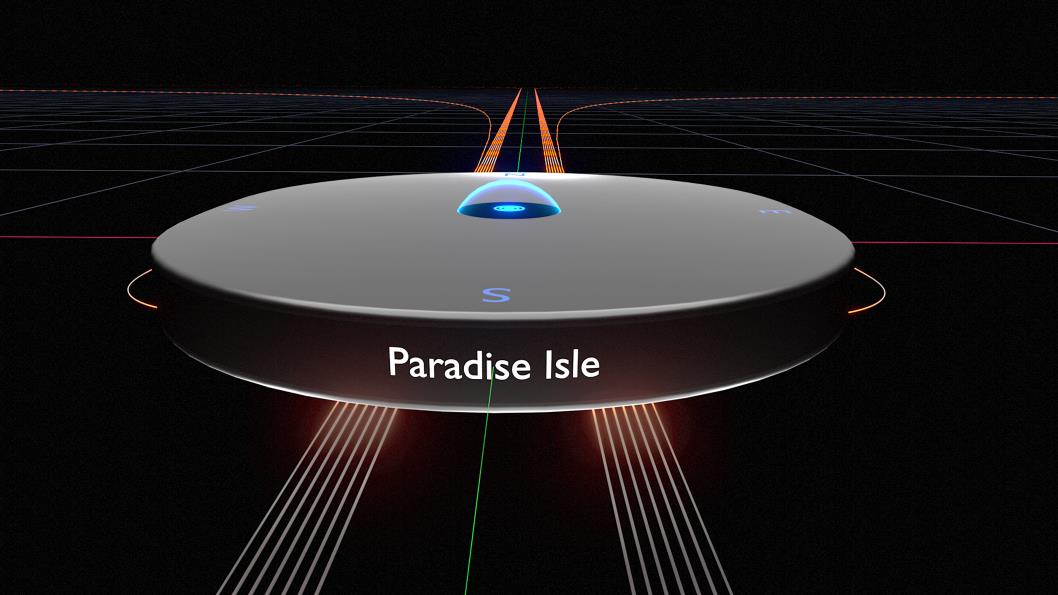
“The reality pressure-presence of this primal force is definitely greater at the north end of the Paradise center than in the southern regions; this is a uniformly registered difference. . .”
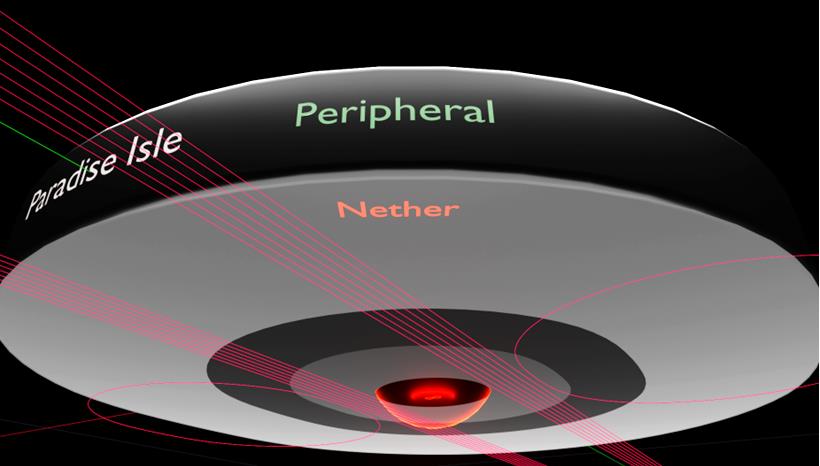
“. . . The mother force of space seems to flow in at the south and out at the north through the operation of some unknown circulatory system which is concerned with the diffusion of this basic form of force-energy.”
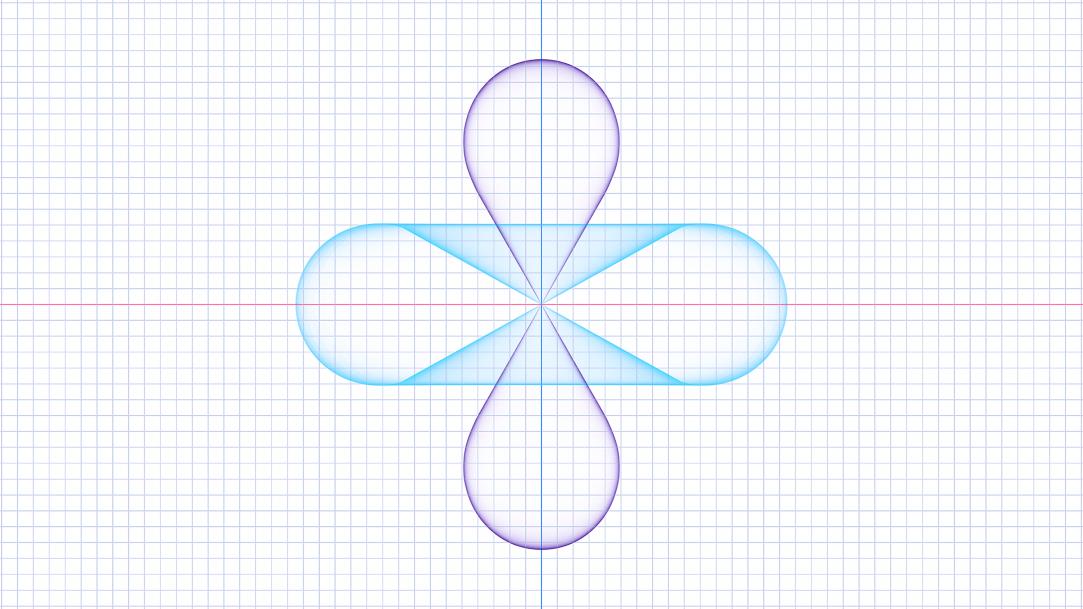
Generic Space Level
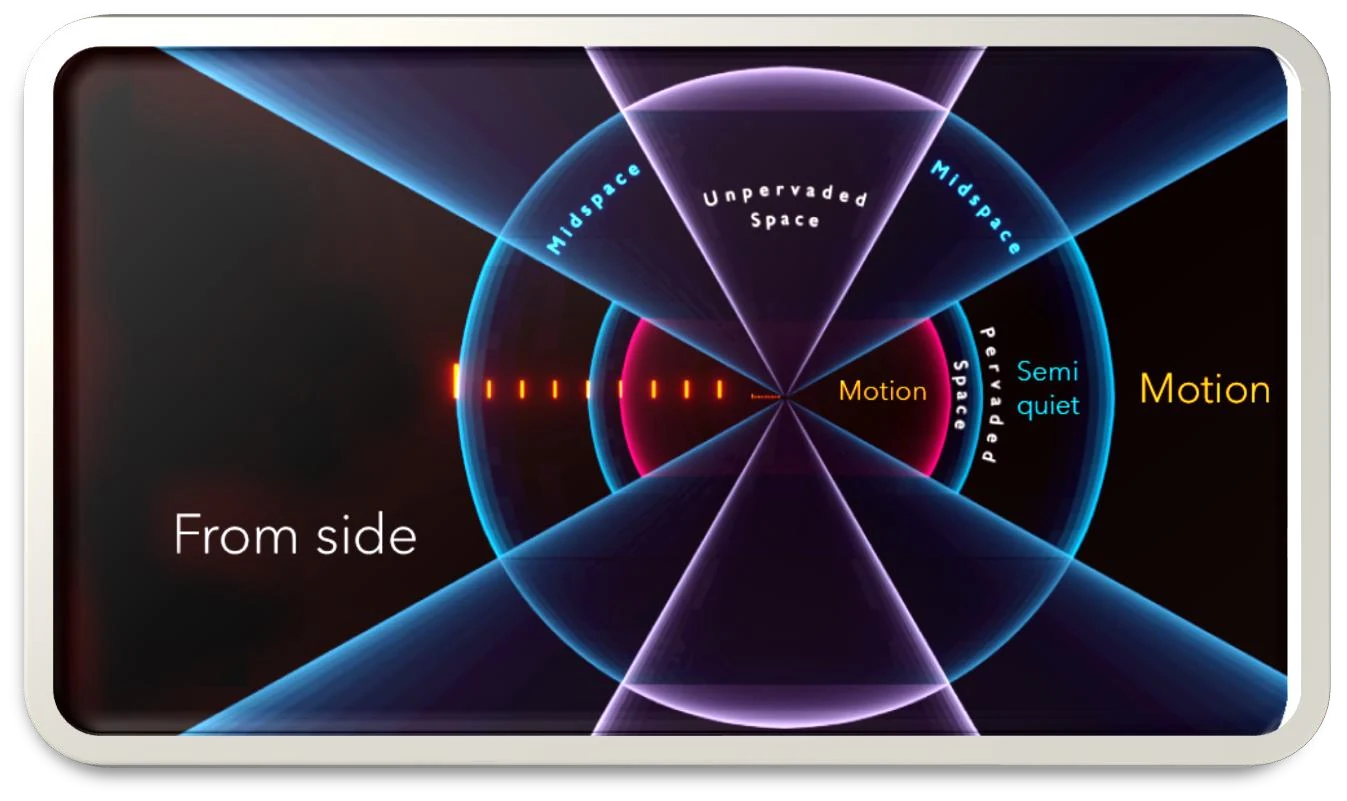
“The relatively quiet zones between the space levels, such as the one separating the seven superuniverses from the first outer space level, are enormous elliptical regions of quiescent space activities. … You may visualize the first outer space level, where untold universes are now in process of formation, as a vast procession of galaxies swinging around Paradise, bounded above and below by the midspace zones of quiescence and bounded on the inner and outer margins by relatively quiet space zones.”
Generic Space Level
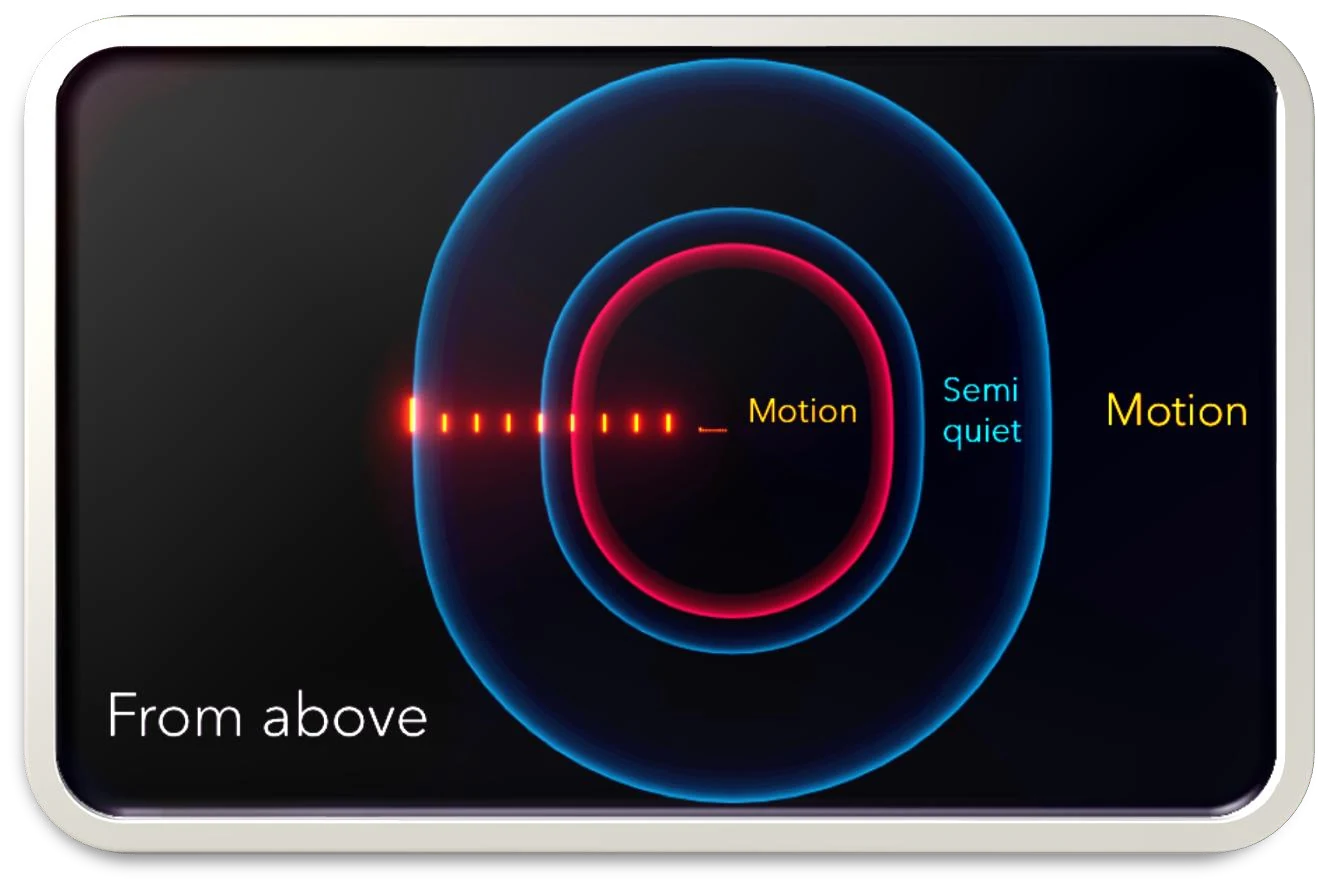
“A space level thus functions as an elliptical region of motion surrounded on all sides by relative motionlessness. Such relationships of motion and quiescence constitute a curved space path of lessened resistance to motion which is universally followed by cosmic force and emergent energy as they circle forever around the Isle of Paradise.”
Comparing the Galactic Coordinate System with Absolute Direction
Figure 8. Comparison table
| Galactic Coordinates | Absolute Direction |
|---|---|
| Established in 1959 | Published in 1955 |
| Sun-centered | Paradise-centered |
| Sgr A indicates horizontal zero-point | Sgr A indicates direction to Paradise Center |
| Incremented 0° to 360° | Uses cardinal directions N, S, E, W |
| North and South Poles | Upper and Nether Regions |
Both systems share a fundamental plane
a) The coordinates of the MUM are based upon Absolute Direction (AD) – a concept described in The Urantia Book. [1]
b) The MUM incorporates Stellar locations whose vectors are numbered according to the Galactic Coordinate System (GCS) established by the International Astronomy Union. [9]
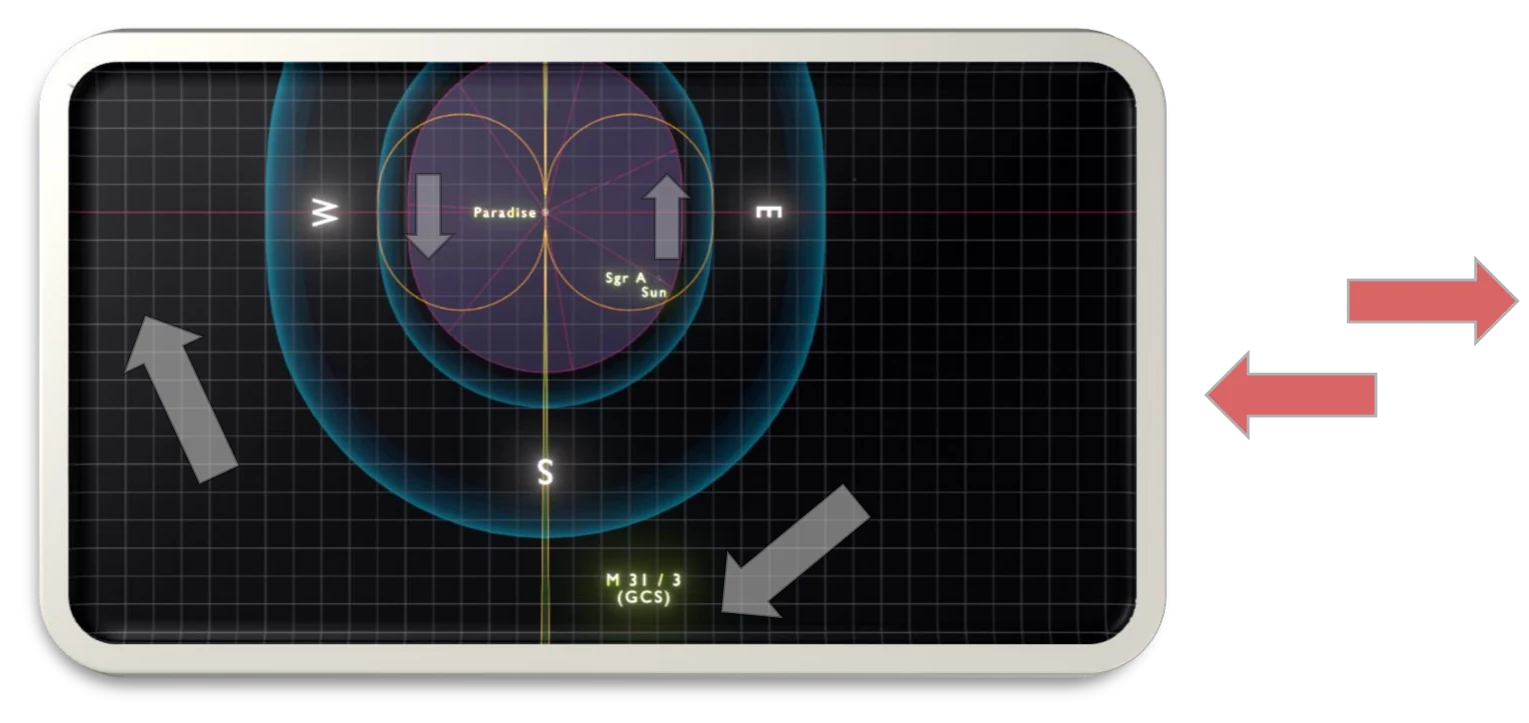
c) AD and GCS share a fundamental plane. However, rotating the GCS poles along an axis formed by the Sun and Sagittarius A (Sgr A) yields star locations and circulations that agree with revealed concepts.
Galactic Coordinate System
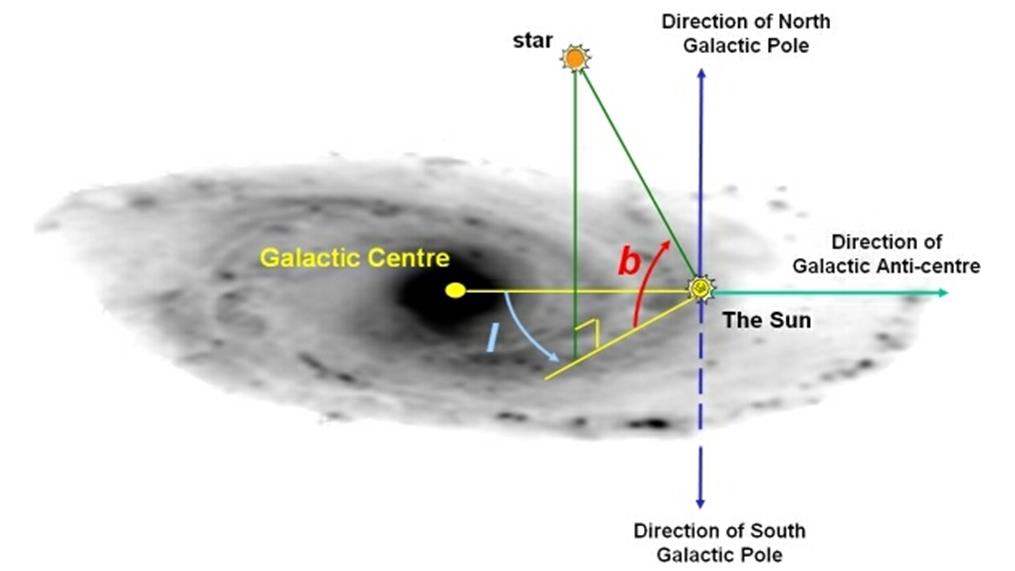
The GCS “is a celestial coordinate system in spherical coordinates, with the Sun as its center, the primary direction aligned with the approximate center of the Milky Way Galaxy, and the fundamental plane parallel to an approximation of the galactic plane but offset to its north. It uses the right-handed convention, meaning that coordinates are positive toward the north and toward the east in the fundamental plane. [10] The approximate center of the Milky Way is Sagittarius A.” [10]
The GCS was established in 1959 by the International Astronomical Union, replacing the older equatorial system employed previously. [10] This is to say, though logically reasoned, the decision to make the system sun-centric and the designation of polarity, is an arbitrary convention accepted by astronomers to offer a standardized method to report observations. Standardized methods allow humans to communicate. An example of this is the worldwide use of the metric system for measurement.
Absolute Direction
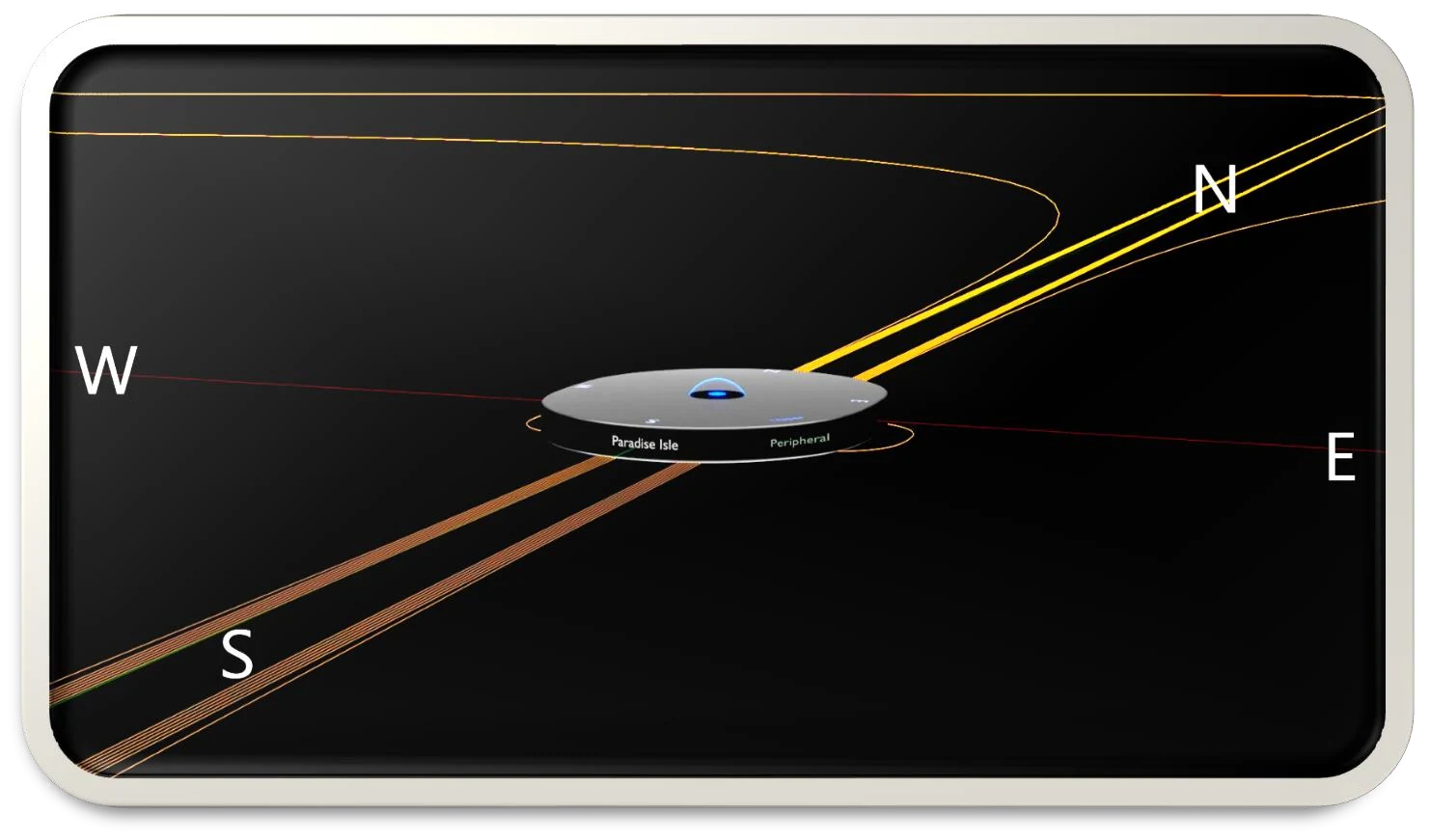
“[Paradise Isle’s] differences in dimensions, taken in connection with its stationary status and the greater out-pressure of force-energy at the north end of the Isle, make it possible to establish absolute direction in the master universe.”
Fundamental Planes
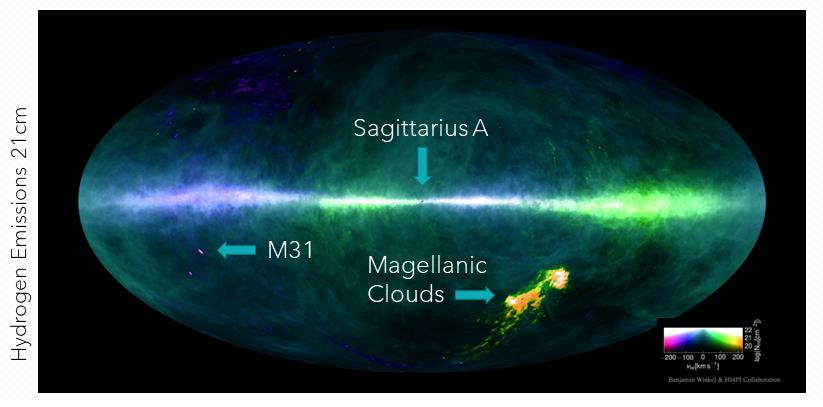
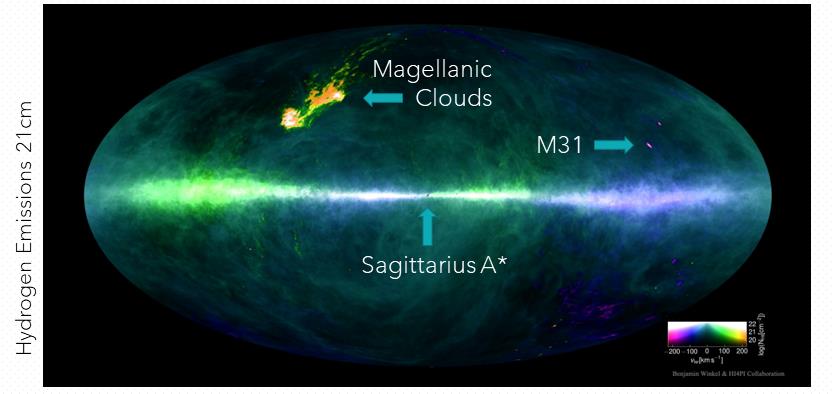
These images show how the GCS fundamental plane pivots 180° on the Sun-Sgr A axis to form the plane of Absolute Direction. Following are examples of AD applied to Cygnus and M31.
Cygnus?
Sun-forming Nebula (Revealed)
“A sun-forming nebula just north of the borders of Orvonton, but within the superuniverse space level, has already given origin to approximately forty thousand suns…”
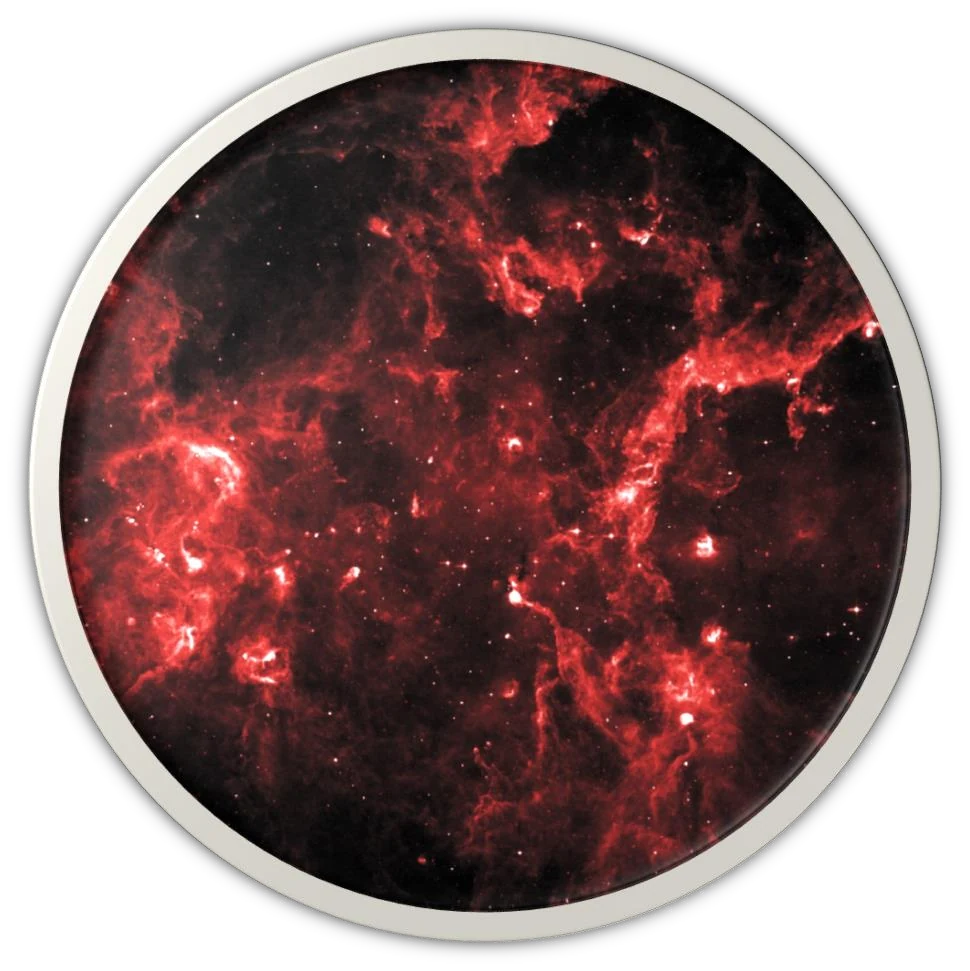
Cygnus
Sun-forming Nebula (Observed)
“The Cygnus-X complex represents the most powerful star-forming region at less than 2 kpcs [6500 ly] from us…” [13]
“Its core, Cygnus OB2, represents the most obvious example of recent star formation…” [13]
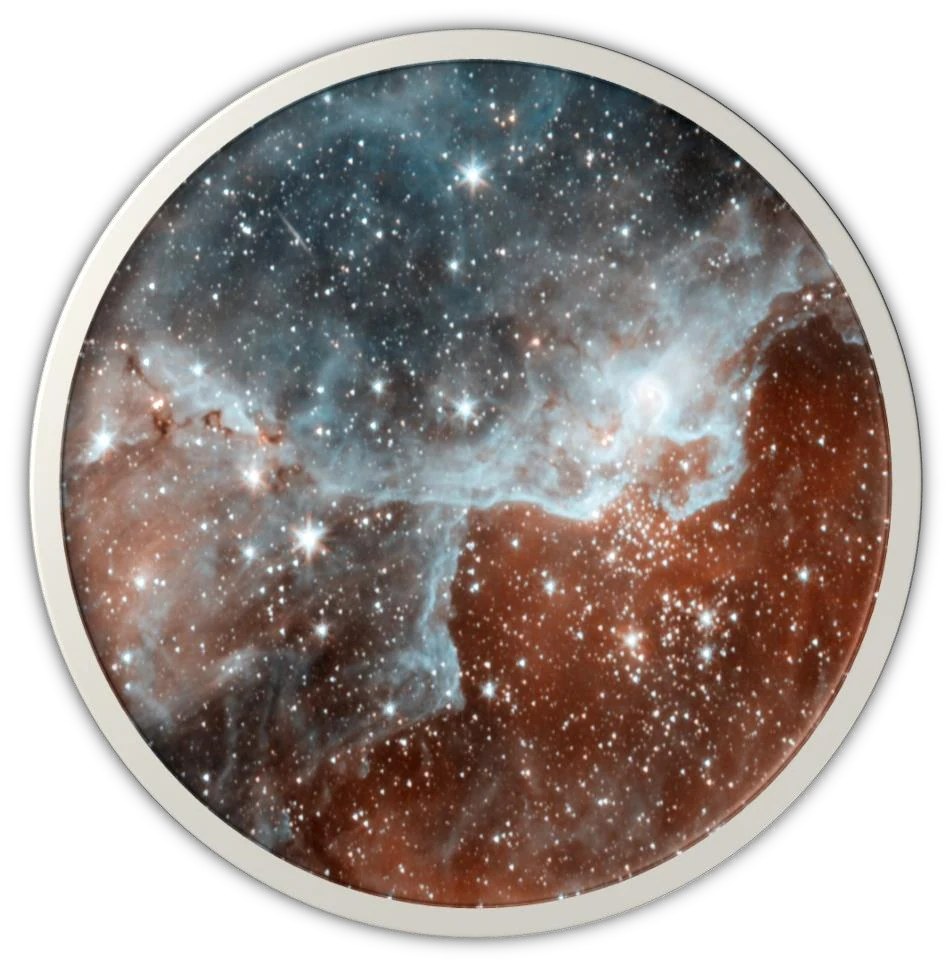
Cygnus, Sun, & Sgr A
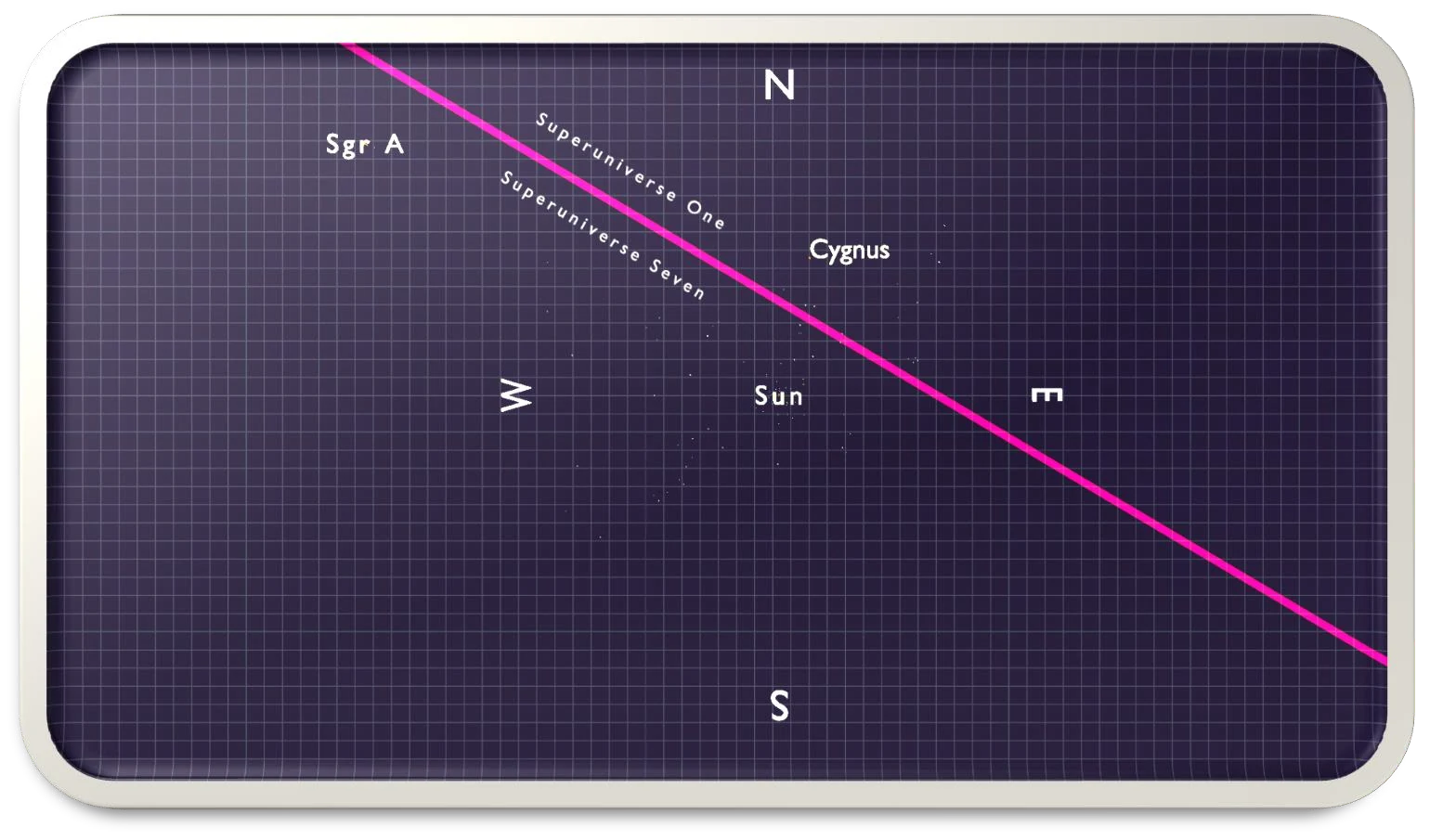
Evidence suggests that Cygnus is the “sun-forming nebula just north of the borders of Orvonton” - superuniverse seven. Using Absolute Direction, Cygnus is found to be north of the Sun. We are told that the nebula is “within the superuniverse space level,” so it is likely that this active region is found in superuniverse one which “swings almost due north.” [1]
The Galactic Coordinate System is centered on the Sun and only applies to one star. Absolute Direction originates at Paradise Isle but can be applied to any sphere in the master universe.
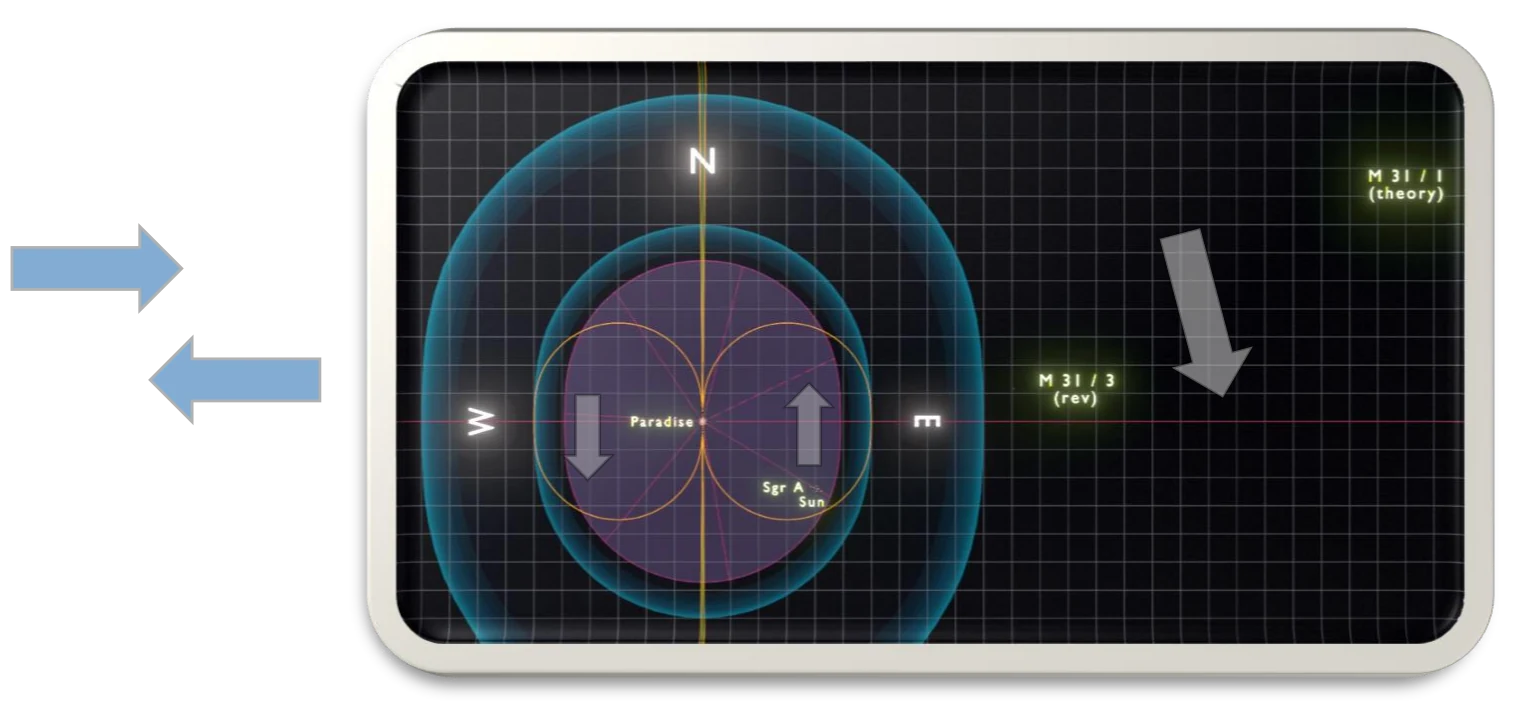
M31 Blueshift vs. Redshift
Future study
Enhance the model with the placements of:
- Voids
- The zone of avoidance
- Galaxy filaments
- Telescope discoveries
- Mother force circuits
Deeper examination of related matters:
- Fermi Bubbles
- Antigravitational Lensing
- The Speed of Space
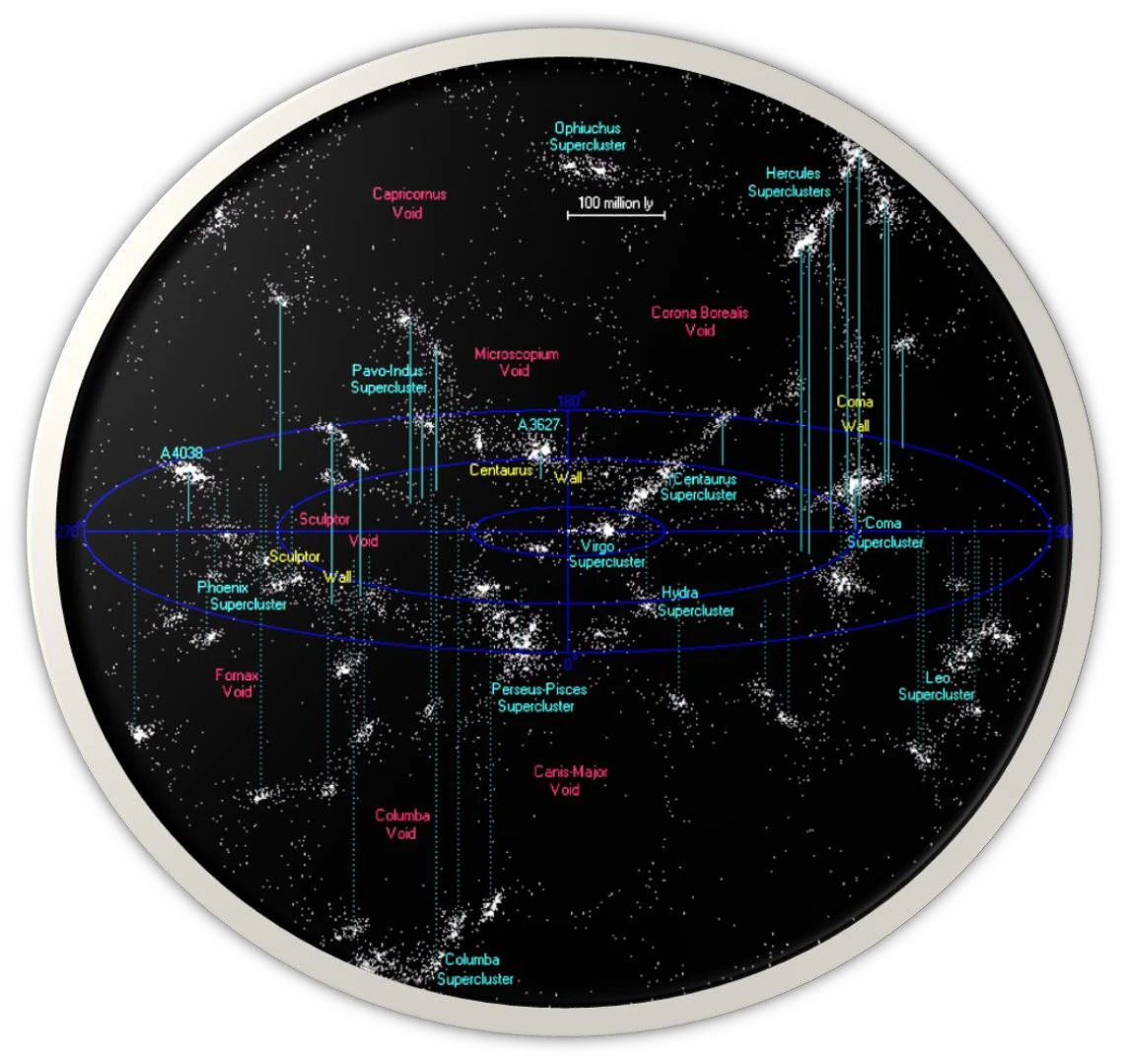
The Master Universe Model scales from 1 light-year to over 200 trillion light-years spanning seven levels. We can attempt to place the above universe structures at appropriate space levels into their regions of “lessened resistance to motion.”
Conclusion
The authors acknowledge the diversity of viewpoints concerning the precise placement of objects and pathways in the master universe surrounding the Eternal Isle. We intend that the Master Universe Model (and this paper) provide Urantia students with a starting point for visually understanding concepts, not with the last word about them. Some will find this vision entirely reasonable; some reasonable in part; and some, hopefully not many, altogether unreasonable.
The presenters of the Urantia Papers provide us with a spectrum of details about the contents of the master universe. However, they did not present pictures. The images are left to be created in the minds of the readers. And it will always be true that the best way to understand the Urantia Papers is to read them. And then, to reread them.
As this model evolves, some will likely dispute the proposed shape of Paradise Isle. Some will find the size of Orvonton to be too small. Other points of issue can be anticipated. While we have endeavored to be faithful to the text and follow the patterns and architectural guidance presented therein, any cosmological model, be it revelatory or evolutionary, should be thought of as “proposed.”
The revelators are the first to admit the things they do not know. The universe models in mansion world museums will blend the observations of Uversa star students with theories about regions where personal beings do not tread.
“Through the realization of truth the appreciation of beauty leads to the sense of the eternal fitness of those things which impinge upon the recognition of divine goodness in Deity relations with all beings; and thus even cosmology leads to the pursuit of divine reality values—to God-consciousness.”
References
- The Urantia Book Chicago, IL, Urantia Foundation, 1955.
- Wikipedia contributors, “Model,” Wikipedia, The Free Encyclopedia, https://en.wikipedia.org/w/index.php?title=Model&oldid=1086787118 (accessed May 25, 2022).
- https://www.blender.org/about/
- https://jumpingpuzzle.gumroad.com/l/HyMHF
- http://simbad.u-strasbg.fr/simbad/
- Wikipedia contributors, “Light-year,” Wikipedia, The Free Encyclopedia, https://en.wikipedia.org/w/index.php?title=Light-year&oldid=1088705780 (accessed May 25, 2022).
- Sadler, William A, Jr., (1975) Appendices to a Study of the Master Universe, Second SocietyFoundation, Chicago, IL.
- Blaauw, A, et al. (March 21, 1960). “The New I.A.U. System of Galactic Coordinates”, Monthly Notices of the Royal Astronomical Society, 121,2. https://adsabs.harvard.edu/full/1960MNRAS.121..123B
- Swinburne Astronomy Online (2022), Swinburne Centre for Astrophysics and Supercomputing, (accessed May 29, 2022), https://astronomy.swin.edu.au/cosmos/G/Galactic+Coordinate+System [archived copy]
- Wikipedia contributors, “Galactic coordinate system,” Wikipedia, The Free Encyclopedia, https://en.wikipedia.org/w/index.php?title=Galactic_coordinate_system&oldid=1063742322 (accessed May 25, 2022).
- Bekhti, NB, et al. (October 20, 2016) HI4PI: a full-sky H | survey on EBHIS and GASS*, Astronomy and Astrophysics, 594, A116. https://doi.org/10.1051/0004-6361/201629178
- NASA, (November 29, 2011) “Young Stellar Grouping in Cygnus X,” Fermi Space Telescope,(accessed May 29, 2022), https://www.nasa.gov/multimedia/imagegallery/image_feature_2119.html
- Berlanas, SR, et.al.(13-15 July 2020). “Exploring the core of the nearest massive star-forming region: A study of Cygnus OB2”, Sociedad Española Astronomía. https://www.sea-astronomia.es/sites/default/files/vl_berlanas_sr.pdf
- NASA/JPL, (August 5, 2009). “Cygnus Star-Forming Region DR22”. Spitzer Space Telscope. (accessed May 29, 2022) https://www.spitzer.caltech.edu/image/ssc2009-15a1-cygnus-star-forming-region-dr22
- Yanny, Brian (April 28, 2014) “What about blueshifts?” Fermi Labs, (accessed May 29, 2022) https://www.fnal.gov/pub/science/inquiring/questions/blueshift.html
- Wikipedia contributors, “Galaxy filament,” Wikipedia, The Free Encyclopedia, https://en.wikipedia.org/w/index.php?title=Galaxy_filament&oldid=1087089224 (accessed May 25, 2022)
Appendices
Appendix A - Partial list of Urantia Book models. (Alphabetical order)
- Tom Allen, The Great Debate on the Scale of Orvonton: A Critical Study of Urantia Book Cosmology
- Richard Bain, video (2011), Modern Astronomy and the Urantia Book https://www.youtube.com/watch?v=GegBhg-ztNQ
- Frederick L. Beckner (2002), Stars, Galaxies, Superuniverses, and the Urantia Book http://www.squarecircles.com/articles/pdf/StarsGalaxiesSuperuniversesUB.pdf [archived copy]
- John Causland, video (2014), Reconciling Urantia Book Cosmology with Modern Astronomy http://www.ubastronomy.com/ [archived copy]
- Sergey V. Chupin (2009), Cosmology of Uversa, Urantia and the Big Bang Myth http://www.sciteclibrary.ru/texsts/eng/stat/st3303eng.pdf [archived copy]
- Norm Du Val (1966), How Large is Orvonton, Really? http://urantia-book.org/archive/studyaid/orvonton.html
- Dave Hansen https://m.youtube.com/results?sp=mAEA&search_query=Creation+tour+urantia+book+master+universe
- Richard Jernigan, Urantia, Nebadon, and the Master Universe on Vimeo
- Dan Massey (1979), Is the Milky Way Orvonton? http://urantia-book.org/archive/science/milkyway.htm
- Nigel Nunn, https://www.youtube.com/playlist?list=PLujf81__tQbQ_tAoVrvr6xOPm4XkZUStU
- George Park, Proving Divine Providence is Responsible for Universe Evolution: Scientific Confirmation of the Plane of Creation Revealed in The Urantia Book
June 2-5, 2016 Science Symposium, Chicago, Illinois - William S. Sadler, Jr., A Study of the Master Universe
- William S. Sadler, Jr., Appendices to a Study of the Master Universe
- Gary Tonge, video (2010), Journey Through the Universe – Urantia Book https://www.youtube.com/watch?v+9CkbbohKDoY [link corrected]
Acknowledgments
Sincere thanks to God-knowing friends who have offered time, support, and advice through the challenging process of cosmic mapmaking. Some are:
- Luigi Bartolomeo
- Columbus, Ohio Study Group
- Richard Jernigan
- Jumping Puzzle
- Rick & Susan Lyon
- Ray Mohrey
- NY/Penn Study Group
- Steve Sawyer
- Geoff Taylor
- Gary Tonge
Converted from the original PDF in October 2026. The wording is unchanged. Web addresses are as printed; where a page has since gone, its link opens an archived copy, and one mistyped address links to the video it named.